
Strategic Conflicts (Non-Military)
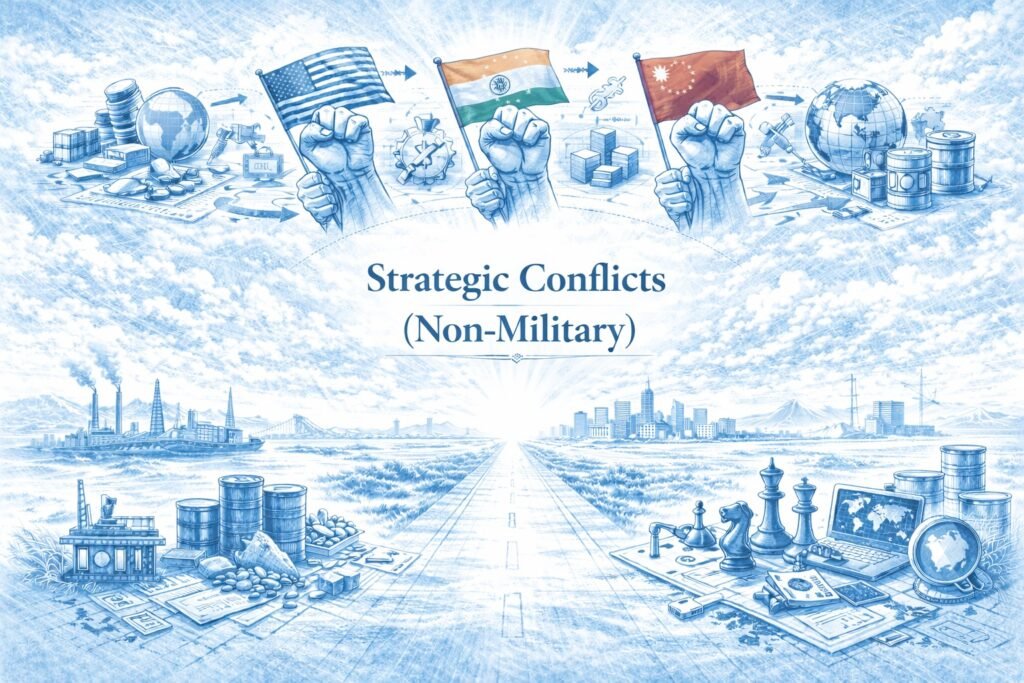
Strategic Conflicts (Non-Military)
- Conflict objective clarity: What is the actor trying to achieve—deterrence, compellence, punishment, containment, signaling, domestic legitimacy?
- Domain identification: Which domains are being used (economic, legal, informational, technological, regulatory, resource, diplomatic)?
- Leverage realism: Actual coercive leverage vs perceived leverage; dependency structures.
- Cost symmetry: Who can endure costs longer (resilience, alternatives, political tolerance)?
- Escalation pathways: How actions trigger counteractions; thresholds and tipping points.
- Attribution reliability: How confident are we about who is acting and why (false flags, proxies, ambiguity)?
- Signaling credibility: Are threats and commitments believable given constraints and history?
- Second- and third-order effects: Spillovers into markets, alliances, domestic politics, legitimacy, and long-term trust.
- Legal/ethical constraints: What instruments are prohibited or legitimacy-damaging even if effective.
- Time dynamics: Short-term pressure vs long-term structural shifts (decoupling, substitution, innovation).
- Feedback loops & adaptation: How the opponent learns, substitutes, and hardens defenses.
- Exit conditions: What constitutes success, stalemate, or loss—and how do we de-escalate?
- Misuse risk: How tools become normalized and used domestically or against unintended targets.