


Transformation
& Turnaround.
A structured framework for examining change necessity, target-state clarity, sequencing, stakeholder response, execution capacity, reversibility, and the conditions that determine whether transformation is complete.
system, not an
event.
A structured examination of what must change, why it must change, how the movement occurs, and what determines whether it succeeds.
This genre examines change necessity and diagnosis, target-state clarity, sequencing and pacing, stakeholder impact and resistance, leadership bandwidth and capability, execution capacity, risk of partial failure, reversibility and optionality, cultural and psychological load, external reactions, and exit conditions.
that structure the inquiry.
This genre examines the conditions, constraints, reactions, capabilities, risks, and completion criteria that surround organizational transformation.
Is the problem correctly identified (root causes vs symptoms)?
Is the desired end state explicit, coherent, and realistically reachable?
Why should the proposed interventions move the system from A → B (causal pathway)?
Are actions ordered correctly; what must happen first, next, later?
Are timelines aligned with cash flow, morale, market pressure, and external deadlines?
Who loses power, status, resources, or identity—and how will they react?
Can leaders sustain intensity, clarity, and decisiveness over time?
Does the organization have the operational slack, skills, and coordination capacity to change while running the business?
What happens if the change stalls midway?
Which moves are irreversible vs reversible?
What stress, fear, fatigue, or cynicism will be induced?
Competitors, regulators, customers, investors.
How and when does the organization know the transformation is complete—or failing?
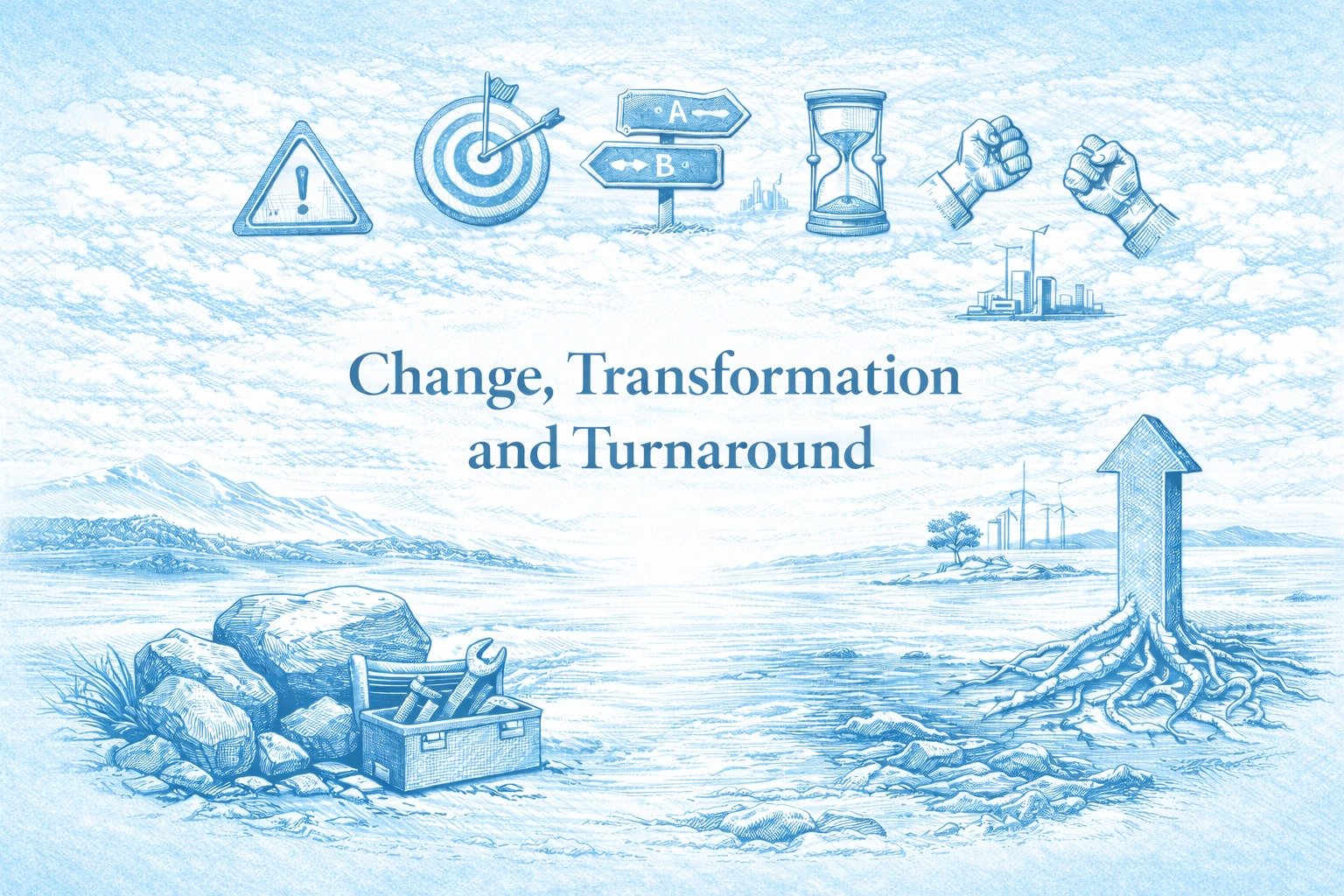
A visual read of the arc this genre’s questions move through — not a claim of a formal Nous Sapient model.
The problem is diagnosed and the case for moving becomes undeniable.
Interventions are sequenced and executed while the business keeps running.
The organization reaches — or fails to reach — a defined, stable exit state.