


& Advocacy
Systems.
A structured inquiry into how advocacy moves from problem definition to durable social change — examining theory of change, legitimacy, stakeholders, power, non-violence, strategy, narrative, coalition governance, backlash, ethics, sustainability, progress measurement, exit criteria, and misuse risk.
strategy, legitimacy
& endurance.
Social change and advocacy inquiry asks whether a desired change is clearly defined, ethically grounded, strategically coherent, and sustainable enough to survive opposition and time.
This genre examines theory of change, stakeholder incentives, sources of power, non-violence, strategic sequencing, narrative discipline, coalition governance, backlash, ethical boundaries, sustainability, meaningful measurement, settlement criteria, and the ways advocacy tools can be misused.
that discipline advocacy.
These questions test whether advocacy has a precise objective, credible theory of change, legitimate methods, realistic power analysis, durable coalition structure, and clear limits on escalation and misuse.
What specifically is to be changed (policy, norm, practice) and why.
Causal pathway from action to outcome; assumptions made explicit.
Moral grounding articulated without absolutism; proportionality considered.
Allies, neutrals, opponents; incentives and constraints for each.
Sources of power (institutional, economic, cultural), leverage points, asymmetries.
Boundaries that prevent coercion, intimidation, or harm.
Coherent strategy guiding tactics; sequencing and escalation rules.
Frames that inform and persuade without dehumanization or misinformation.
Decision rules, internal dissent handling, accountability.
Polarization, repression, co-optation, fatigue.
Truthfulness, consent, avoidance of manipulation.
Volunteer burnout, funding, leadership succession.
Leading indicators aligned to outcomes, not vanity metrics.
When to declare success, compromise, or stop.
Advocacy methods repurposed for harassment, silencing, or mob dynamics.
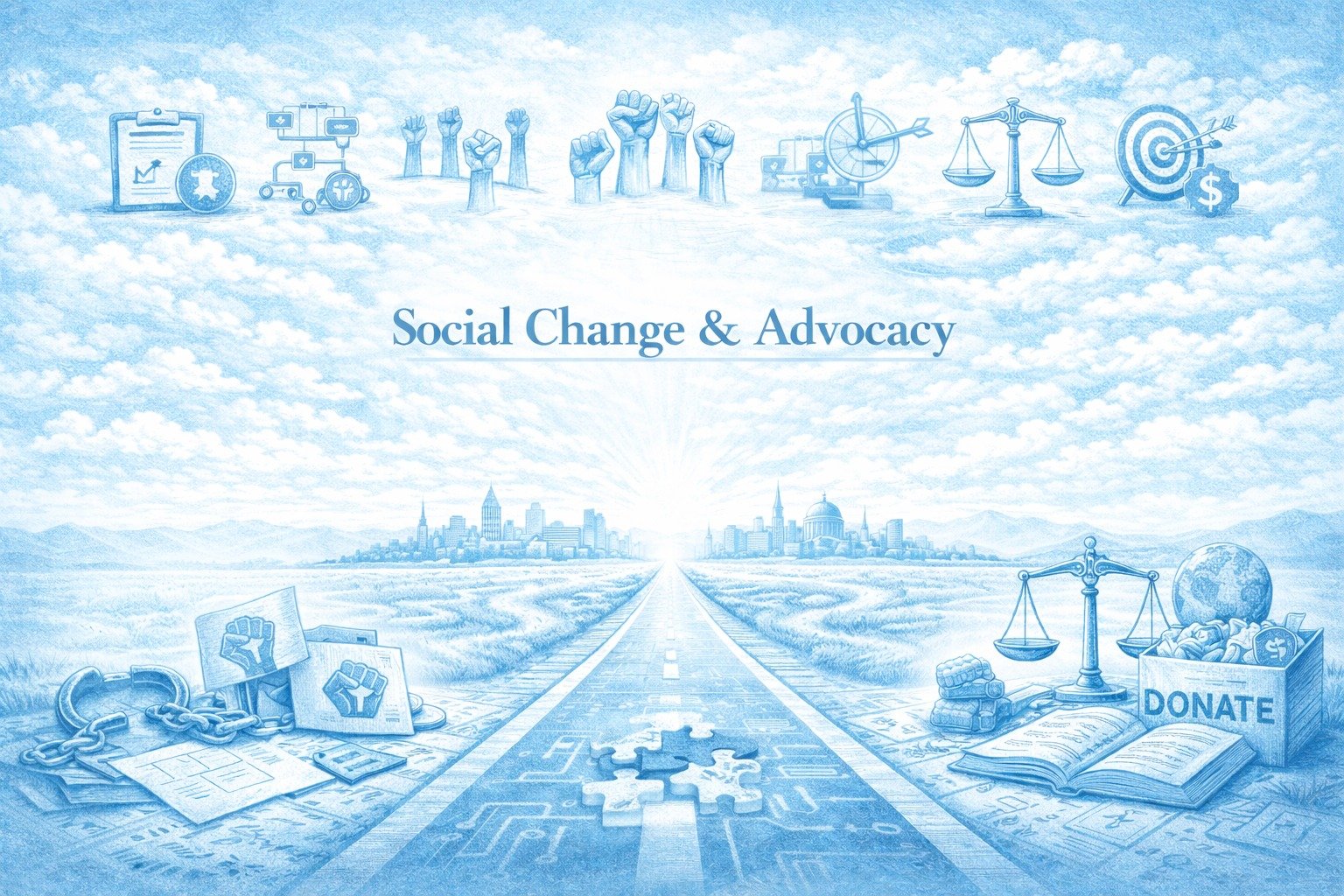
A visual grouping of this page’s social-change and advocacy questions — not a claim of a formal Nous Sapient model.
Clarify the change sought, establish legitimacy, map stakeholders, and make the causal theory explicit.
Understand power, govern coalitions, sequence tactics, communicate responsibly, and maintain non-violent ethical boundaries.
Track backlash, protect people and resources, measure real progress, define settlement conditions, and guard against misuse.