


Expression.
A structured inquiry into how creative ability is developed, practiced, evaluated, and sustained — examining goals, medium-specific constraints, process design, component skills, critique, deliberate practice, output evidence, originality, audience intent, creative blocks, misuse risk, and the boundary between general guidance and professional training.
craft through
practice.
Creative development becomes useful when inspiration is translated into repeatable processes, component skills, deliberate practice, meaningful feedback, and observable output.
This genre examines goal clarity, medium specificity, process design, skill decomposition, critique discipline, deliberate practice, constraints, creative resistance, originality, audience intent, sustainable routine, misuse risk, and the boundary where specialist training becomes necessary.
that turn expression into craft.
These questions test whether creative guidance is specific, actionable, evidence-producing, sustainable, ethically bounded, and appropriately matched to the medium and intended audience.
What kind of creativity is targeted (craft skill, ideation volume, expressive clarity, originality, audience impact).
Which medium and constraints (writing, design, art, music, speaking).
Concrete steps, exercises, schedules, iteration loops—not just philosophy.
Component skills (composition, structure, rhythm, color, voice, editing, critique).
How quality is evaluated; what “better” means; how to receive and apply critique.
Deliberate practice vs casual repetition; progressive difficulty; reps and time.
Whether guidance produces observable artifacts and measurable improvement.
Use of constraints to drive creativity rather than paralyze it.
Fear, perfectionism, identity threat—handled without turning into therapy.
Whether novelty is defined and distinguishable from remixing.
Expression aligned to intended impact (clarity, beauty, persuasion, meaning).
Practices that can be maintained without burnout.
“Creativity” techniques used for manipulation, plagiarism, or unethical appropriation.
When specialized mentorship/credentialing is required.
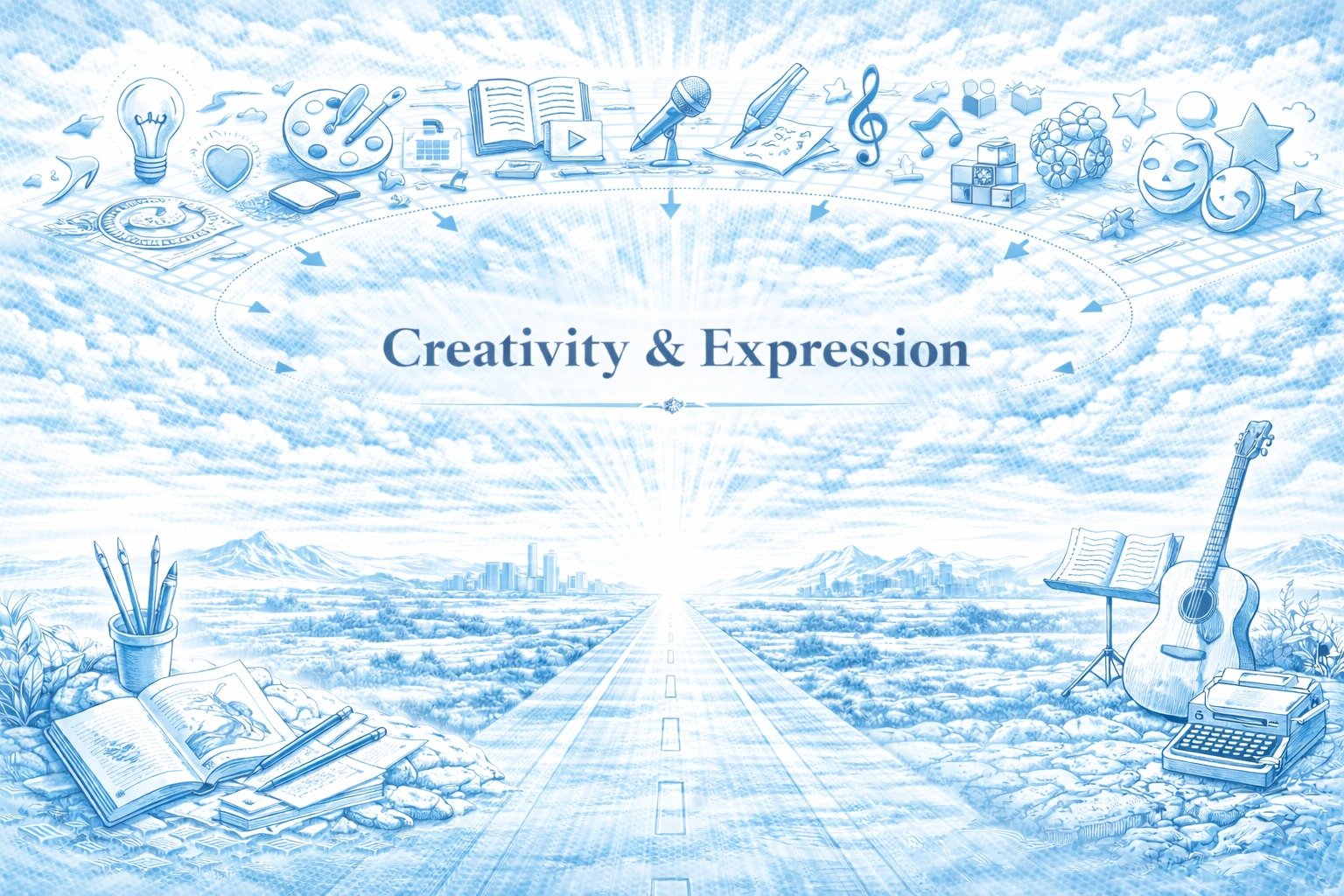
A visual grouping of this page’s creativity, art, and expression questions — not a claim of a formal Nous Sapient model.
Clarify goals, medium, audience, originality, constraints, and the specific form of creative capability being developed.
Break craft into component skills, design deliberate practice, use feedback well, and build sustainable routines.
Produce observable work, align output to intent, manage resistance, respect ethical boundaries, and know when specialist training is needed.