


Psychology
Inquiry.
A structured inquiry into how people, teams, leadership, incentives, culture, systems, and organizational conditions shape performance and well-being — examining constructs, evidence, context, power, motivation, coordination, implementation, change, measurement, unintended effects, ethics, and long-term organizational resilience.
human systems,
not just structures.
Organizational psychology examines how individual behavior, group dynamics, leadership, incentives, culture, and institutional systems combine to shape performance and well-being.
This genre tests whether organizational claims are conceptually clear, evidence-grounded, sensitive to context and power, feasible to implement, measurable without distortion, and robust to resistance, unintended consequences, and ethical constraints.
that discipline organizational claims.
These questions test whether organizational interventions account for people, incentives, culture, power, coordination, context, measurement, implementation, unintended effects, and the ethical realities of changing human systems.
Are individual, team, leadership, and organizational-level effects clearly distinguished?
Are engagement, trust, culture, motivation, performance, and related constructs well-defined and distinct?
How exactly is the proposed factor expected to change behavior or organizational outcomes?
Are findings supported by credible data and appropriate designs, with alternative explanations considered?
Industry, role, hierarchy, geography, labor market, and institutional conditions affecting outcomes.
Do rewards, goals, norms, and constraints reinforce the behavior the organization wants?
How formal authority, informal influence, status, and dependency are distributed and exercised.
Roles, information flows, conflict mechanisms, accountability, and interdependence.
Deep norms and assumptions separated from short-term perceptions and managerial messaging.
Can the intervention work under real workload, capability, managerial, and resource constraints?
How people adapt, comply, resist, reinterpret, or route around the intervention.
Do metrics capture real performance and well-being, or create gaming and proxy optimization?
Impacts on workload, trust, turnover, collaboration, learning, and incentives elsewhere in the system.
Are autonomy, privacy, fairness, dignity, and power asymmetries adequately protected?
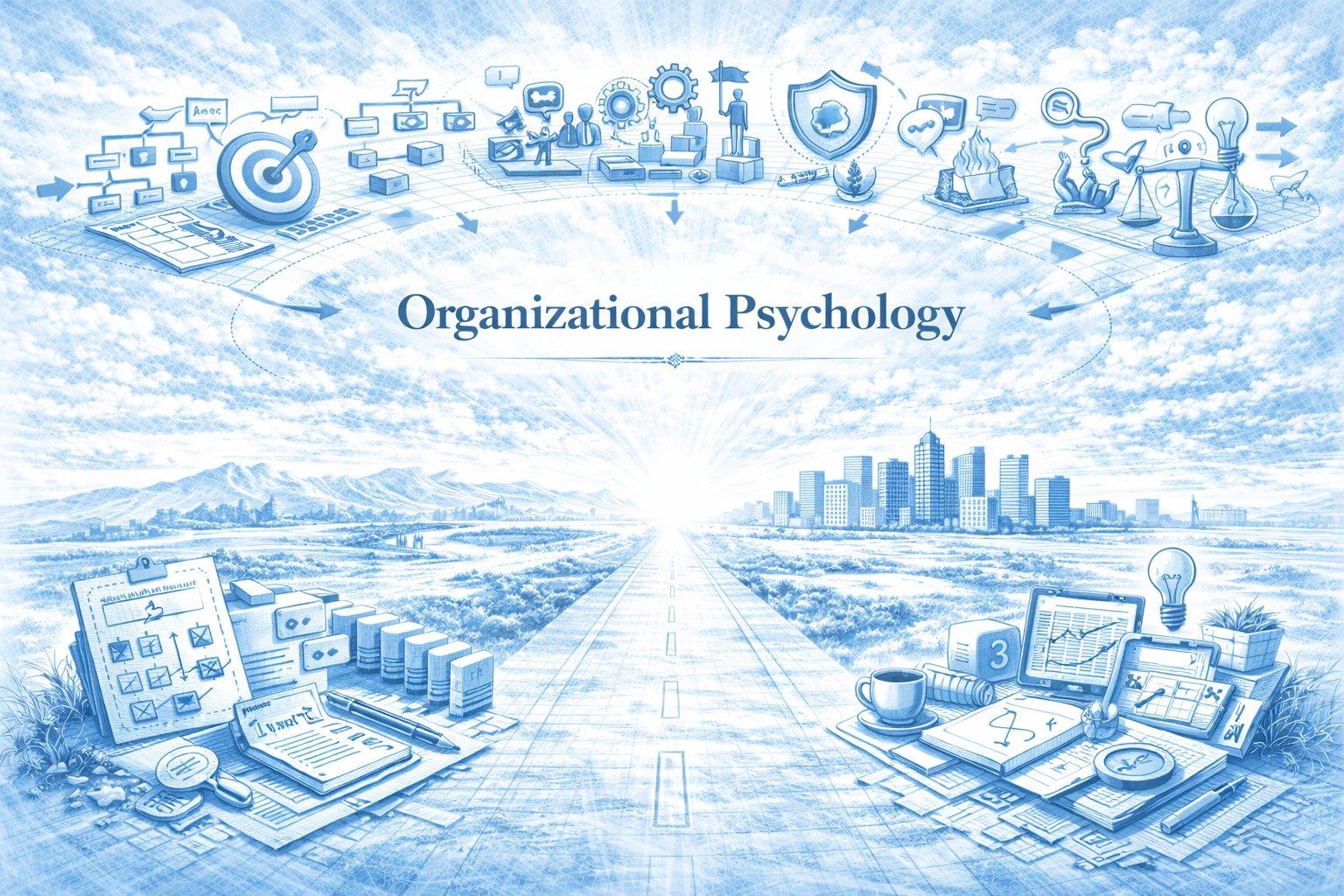
A visual grouping of this page’s organizational-psychology questions — not a claim of a formal Nous Sapient model.
Clarify constructs, motivation, teams, leadership, context, and the human experience of organizational systems.
Examine incentives, power, culture, coordination, measurement, and implementation under real operating constraints.
Test resistance, unintended effects, ethical limits, learning, adaptation, and whether change remains durable over time.