


Resilience &
ESG.
A structured inquiry into which sustainability and ESG issues materially affect long-term viability — examining resilience, causal impact, time horizons, trade-offs, measurement integrity, system boundaries, adaptation, incentives, second-order effects, governance accountability, stress robustness, and revision logic.
resilience, not
optics.
Sustainability and ESG inquiry is strongest when it separates material long-term risk from signaling, and tests whether proposed actions genuinely improve system resilience.
This genre examines materiality, causal pathways, time horizons, explicit trade-offs, measurement quality, system boundaries, adaptation versus mitigation, incentive alignment, downstream effects, governance accountability, robustness under stress, and the conditions under which commitments should be revised or exited.
that test durable value.
These questions test whether sustainability commitments address material risks, create real resilience, survive adverse conditions, and remain accountable to evidence rather than optics.
Which sustainability or ESG factors are materially relevant to the system/entity in question (financially, operationally, societally)?
Distinguish genuine resilience risks from reputational or signaling goals.
How proposed actions actually reduce risk or increase long-term viability.
Short-term costs vs long-term benefits; intergenerational trade-offs.
What is sacrificed (cost, speed, margin, flexibility) to achieve resilience goals.
Whether indicators track real outcomes or proxy optics.
What is inside vs outside the sustainability/resilience scope.
Preparedness for shocks vs attempts to prevent them.
Whether incentives reinforce durable behavior change or surface compliance.
Supply-chain shifts, cost pass-throughs, social backlash, regulatory arbitrage.
Who owns long-horizon risks and decisions.
Performance under adverse, not ideal, conditions.
How commitments are revised as evidence or context changes.
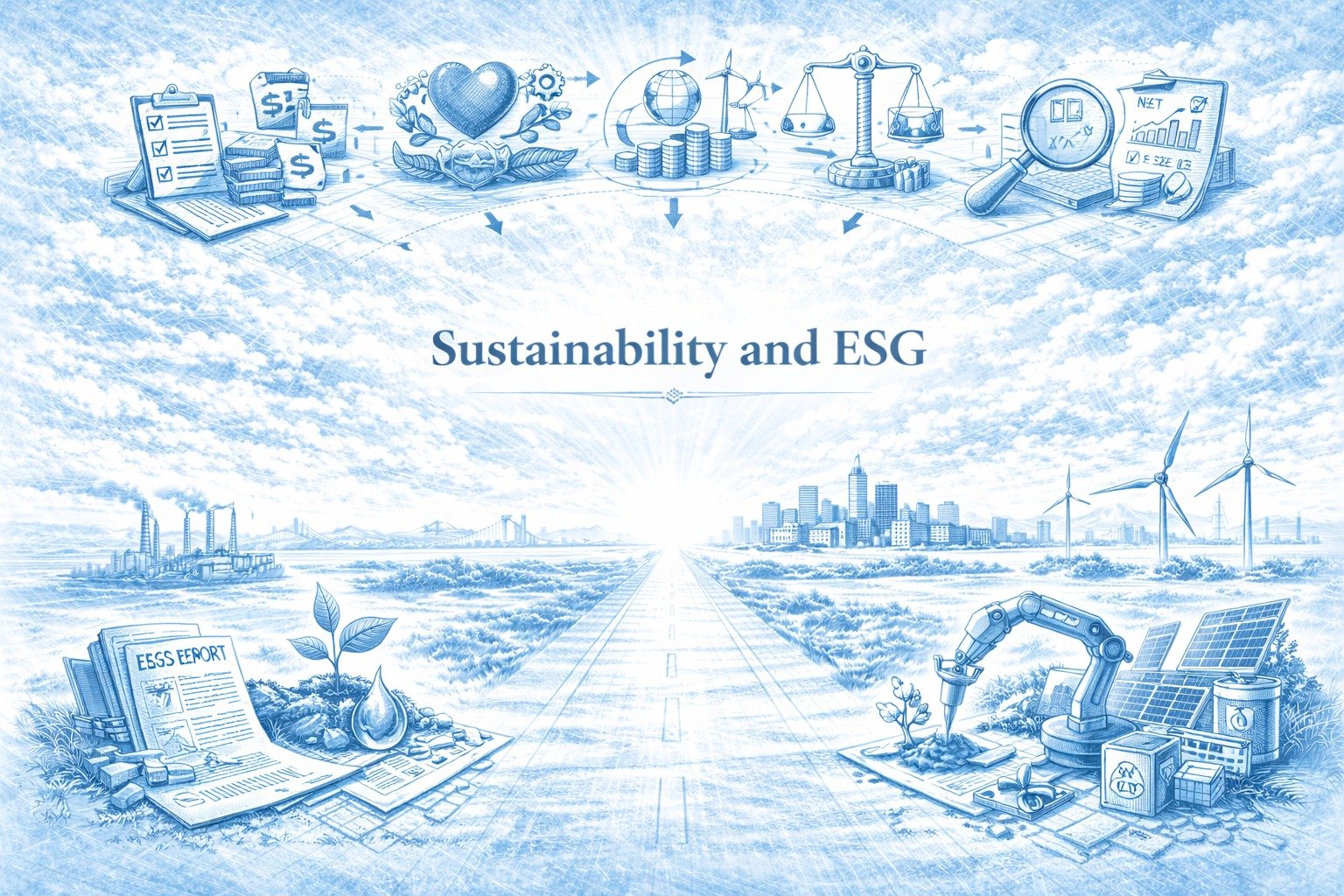
A visual grouping of this page’s sustainability, resilience, and ESG questions — not a claim of a formal Nous Sapient model.
Identify what truly matters, separate risk from virtue signaling, and define credible causal pathways and system boundaries.
Balance time horizons, trade-offs, adaptation, mitigation, incentives, and performance under real-world stress.
Track meaningful outcomes, assign ownership, anticipate downstream effects, and revise commitments when evidence changes.