


& International
Relations.
A structured inquiry into how states, institutions, coalitions, and other actors behave under competing interests, constraints, uncertainty, geography, economic interdependence, escalation risk, deterrence, domestic politics, and multiple plausible strategic futures.
through systems,
not isolated moves.
Geopolitical analysis tests how interests, capabilities, incentives, alliances, geography, economic exposure, domestic constraints, and uncertainty interact across time.
This genre examines actor models, intent versus capability, information quality, strategic horizons, domestic politics, coalition dynamics, logistics, interdependence, escalation, deterrence, downstream effects, scenario branching, and whether policy responses can actually be implemented and sustained.
that discipline strategic analysis.
These questions test whether geopolitical interpretation separates capability from intent, treats uncertainty seriously, anticipates interaction effects, and avoids reducing complex systems to a single forecast.
Who are the relevant actors, and what are their objectives, constraints, and internal factions?
Distinguish what an actor can do from what it wants to do.
What payoffs and risks shape behavior across security, economy, and legitimacy?
Sources, reliability, deception risk, and uncertainty bounds.
Short-term tactical moves versus long-term strategic aims.
Leadership survival, public opinion, elite factions, and economic stability.
Credibility, burden-sharing, and fragmentation risk.
Physical realities, chokepoints, and supply chains.
Sanctions, trade exposure, capital flows, and technology dependence.
How actions trigger reactions; thresholds and red lines.
Credibility of threats and commitments.
Regional spillovers, refugee flows, market shocks, and regime instability.
Multiple plausible futures, not a single forecast.
Whether proposed responses are implementable and sustainable.
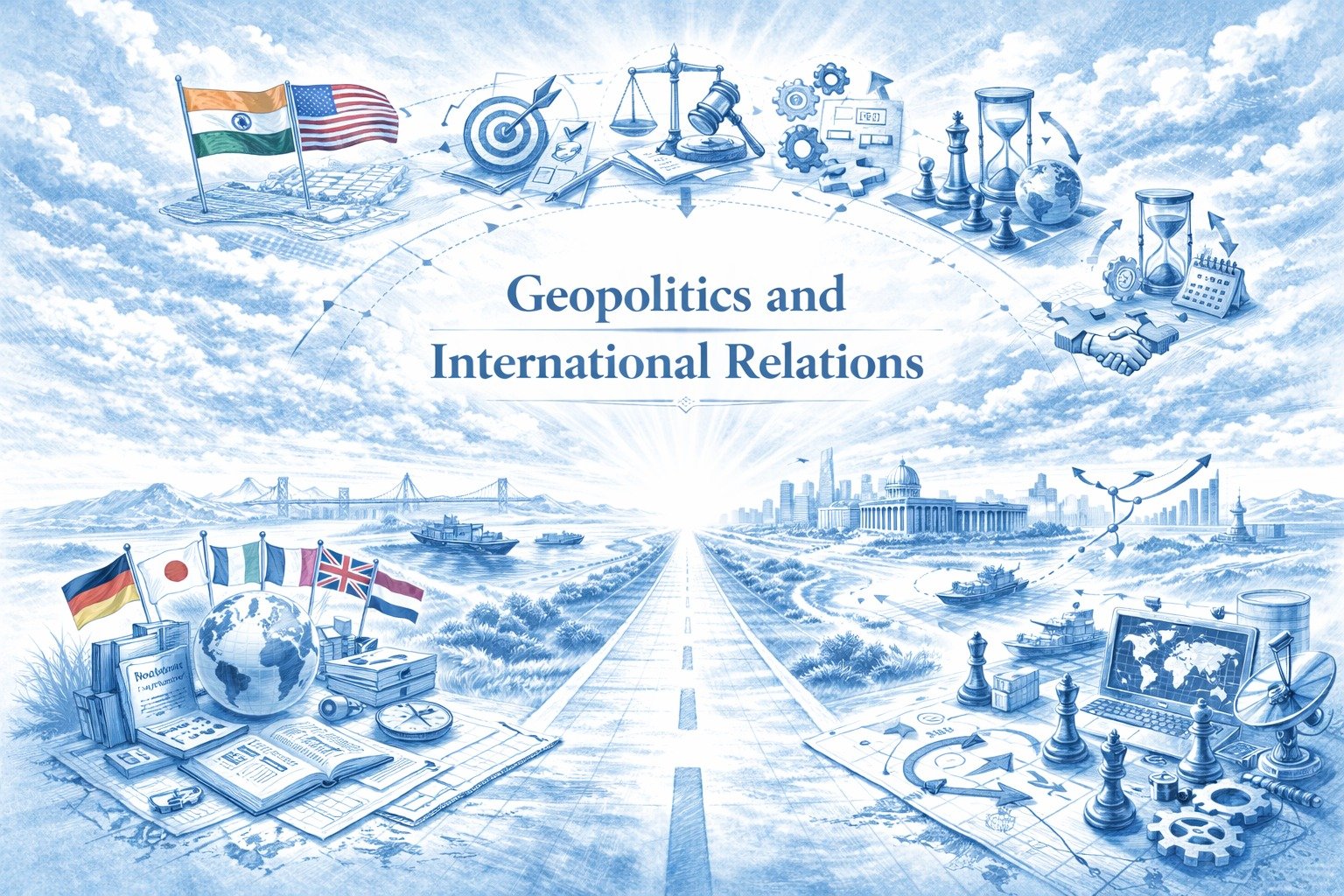
A visual grouping of this page’s geopolitical and international-relations questions — not a claim of a formal Nous Sapient model.
Establish interests, capabilities, incentives, domestic pressures, information quality, and strategic horizons.
Test alliances, geography, logistics, economic dependence, escalation pathways, deterrence, and signaling.
Branch scenarios, examine second- and third-order effects, and test whether proposed responses are feasible and sustainable.