


& Institutional
Governance.
A structured inquiry into how public problems are framed, how policy instruments are chosen, how institutions implement and enforce decisions, and how legitimacy, incentives, distributional effects, adaptability, administrative burden, and exit conditions shape policy performance.
implementable,
legitimate & adaptive.
Public policy inquiry tests not only whether an intervention is desirable, but whether institutions can implement it lawfully, credibly, efficiently, and sustainably.
This genre examines problem framing, policy objectives, instrument choice, causal mechanisms, legal and constitutional fit, institutional capacity, incentive effects, distributional impacts, enforcement dynamics, administrative burden, legitimacy, adaptability, and exit or sunset conditions.
that test public action.
These questions test whether a policy is correctly framed, legally grounded, institutionally feasible, resistant to gaming, socially legitimate, and adaptable as evidence changes.
Is the public problem correctly defined (root causes vs symptoms)?
Are goals specific, prioritized, and measurable (without metric fetishism)?
Why regulation vs taxation vs subsidy vs information vs market design?
How the policy is expected to change behavior and outcomes.
Consistency with statutory authority, rights, and due process.
Can agencies realistically implement, monitor, and enforce?
How actors will adapt, evade, or exploit rules.
Who benefits, who bears costs, and over what time horizons.
Spillovers, feedback loops, market distortions, and political reactions.
Costs imposed on citizens, firms, and the state.
Detection, penalties, discretion, and corruption risk.
Public acceptance, perceived fairness, and credibility.
Ability to revise policy as evidence evolves.
When and how the policy should end or be redesigned.
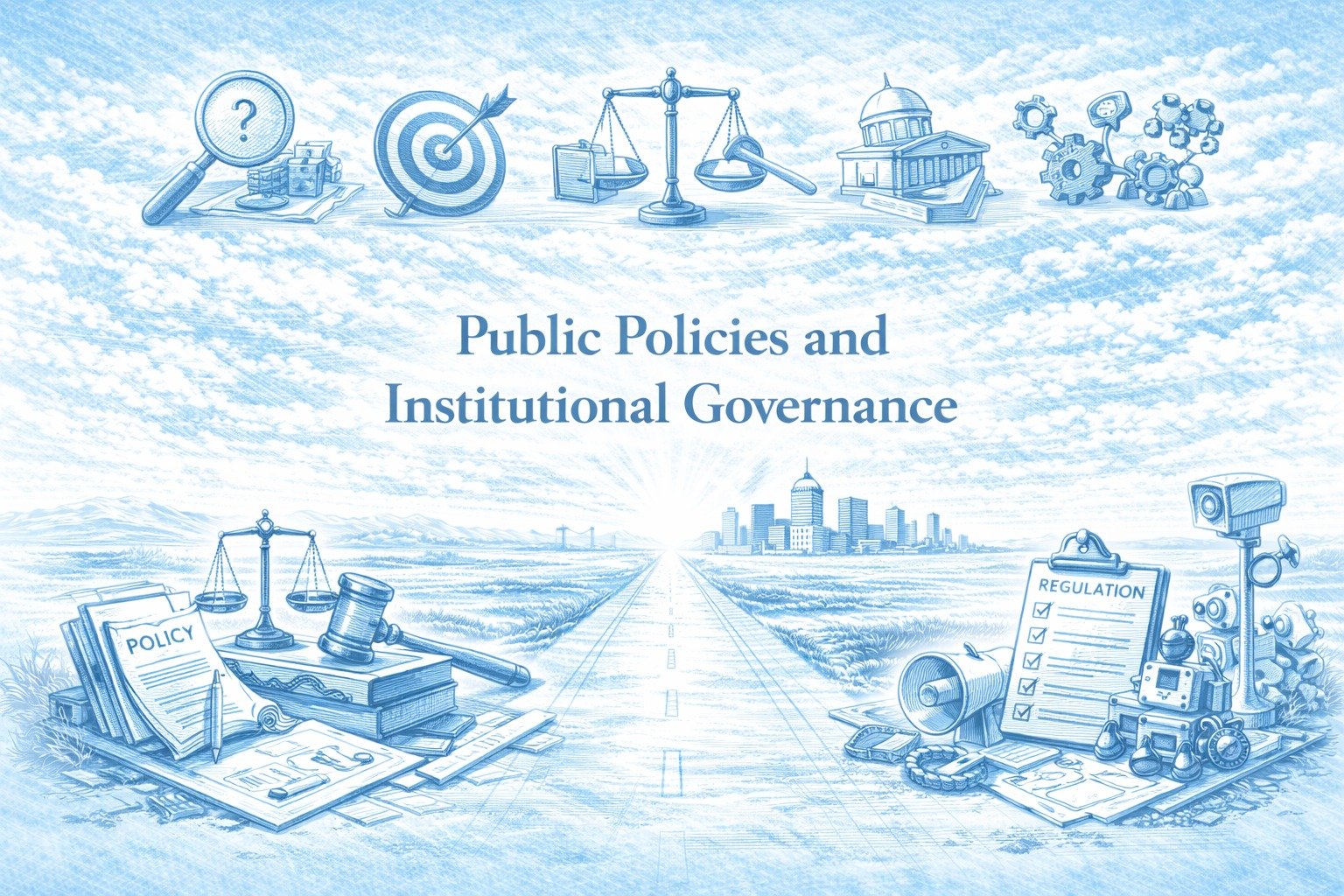
A visual grouping of this page’s public-policy and institutional-governance questions — not a claim of a formal Nous Sapient model.
Define the problem, clarify objectives, choose instruments, and establish the causal logic of intervention.
Test legal fit, implementation capacity, incentives, distributional effects, compliance, burden, legitimacy, and trust.
Monitor downstream effects, revise policy as evidence evolves, and preserve clear redesign or sunset conditions.