


& Competitive
Strategies.
A structured inquiry into how an enterprise creates, captures, and protects value — examining customers, revenue logic, unit economics, positioning, competitive advantage, defensibility, capabilities, scale, adaptation, strategic trade-offs, and downside risk.
advantage, then
endurance.
A business model explains how value is created and captured. Competitive strategy asks why that model should continue to win when customers, rivals, technology, and market conditions change.
This genre examines customer logic, revenue architecture, unit economics, positioning, competitive advantage, imitation barriers, strategic responses, scalability, capability fit, trade-offs, adaptation, disruption exposure, and the failure modes that can weaken an otherwise attractive model.
that test strategic durability.
This inquiry tests whether a business creates real value, captures enough of it, protects its position, and can sustain the model as competitive conditions evolve.
What important problem is solved, for whom, and why is the solution meaningfully better than alternatives?
Who chooses, who pays, and what drives adoption, retention, repeat use, or switching?
How does the enterprise capture value through pricing, contracts, subscriptions, transactions, or recurring revenue?
Does each additional customer, transaction, or unit strengthen the economics — or magnify weak margins and hidden costs?
Where does the business choose to compete, and what markets, customers, features, or activities does it deliberately exclude?
What structural source of advantage allows superior performance beyond temporary execution, novelty, or favorable timing?
What prevents rivals, entrants, suppliers, customers, or substitutes from copying, bypassing, or eroding the advantage?
How are incumbents, substitutes, entrants, platforms, regulators, and ecosystem partners likely to respond?
Can the model expand without degrading service quality, economics, control, speed, culture, or customer experience?
Does the organization have the talent, systems, assets, partnerships, capital, and operating discipline the strategy requires?
What must the business refuse, sacrifice, or constrain in order to preserve focus, coherence, and differentiation?
Which shifts in technology, regulation, customer behavior, channels, or market structure could invalidate the current model?
Which assumptions, dependencies, concentrations, irreversible commitments, or feedback loops could break the model?
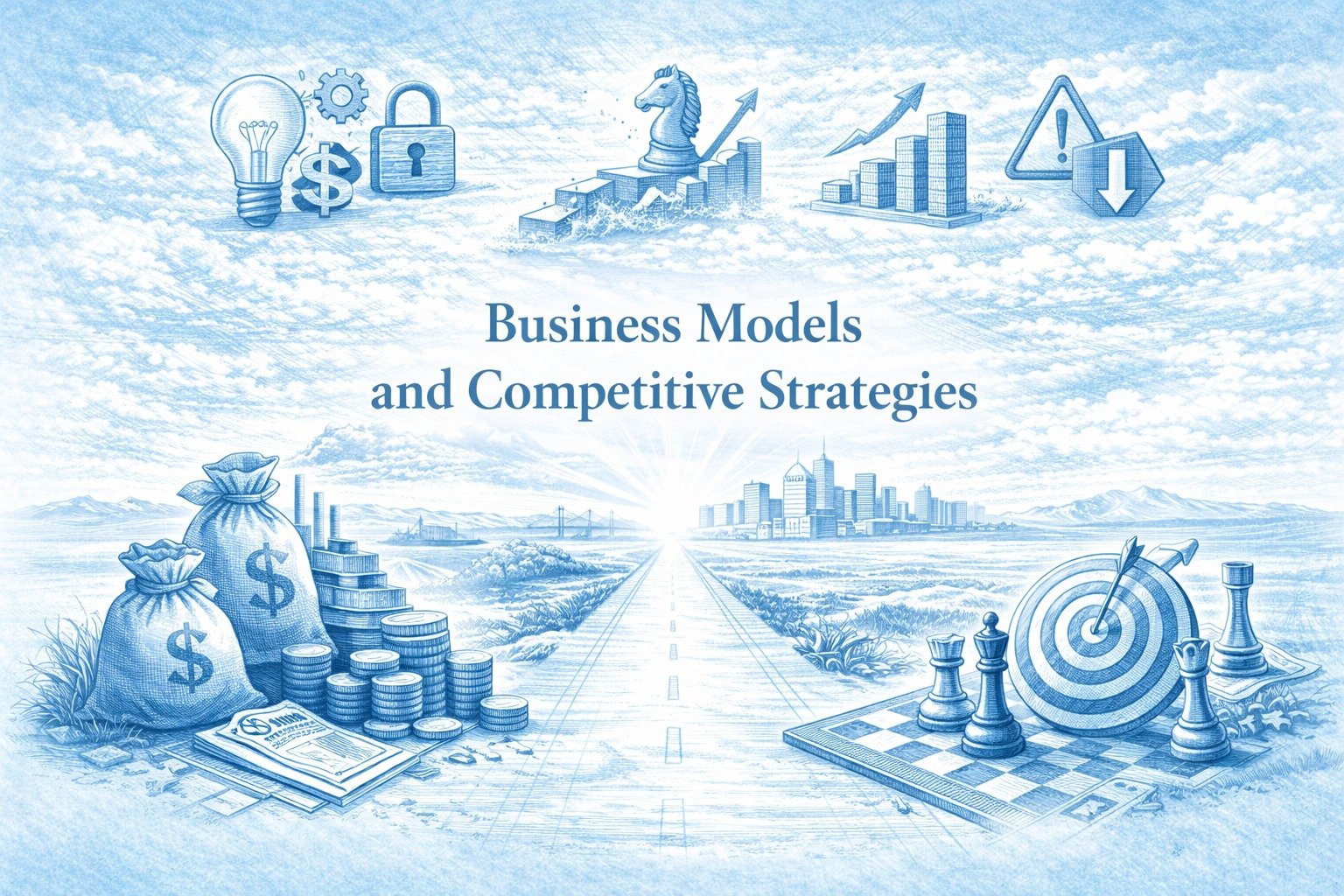
A visual grouping of this page’s business-model and competitive-strategy questions — not a claim of a formal Nous Sapient model.
Establish customer relevance, willingness to pay, revenue logic, and sound unit economics.
Build positioning, defensibility, capability fit, and strategic trade-offs that competitors cannot easily replicate.
Test scalability, competitive response, disruption exposure, adaptability, and critical failure modes.